
Exposed Hive Removal in Escondido, CA
Open-Air Comb Handled Without the Drama
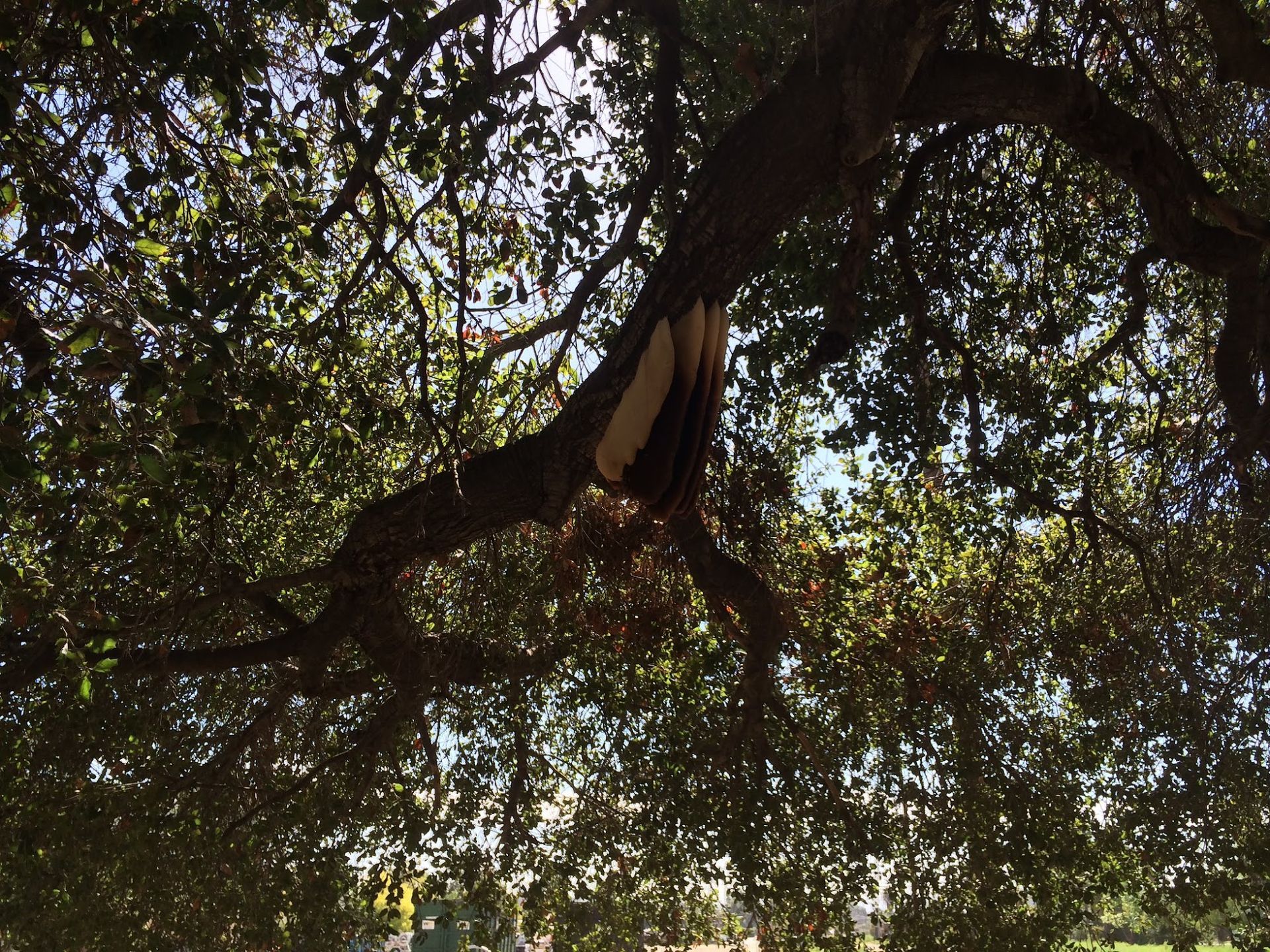
Colonies build in the open only where winters stay mild, which is precisely why Southern California sees hanging comb that would never survive a harder climate. Bee Free Bee Removal clears those open-air nests across Escondido, CA, and through Vista, San Marcos, Bonsall, and Rancho Santa Fe, taking them off tree limbs, patio covers, fence lines, block walls, playground frames, and the underside of second-story eaves where they hang in plain sight above the walkway.
An exposed nest looks manageable and behaves like anything but, since every single bee in the colony is sitting on the outside of the comb rather than tucked away inside a cavity. Approach, timing, and protective gear all matter considerably more here, not less. With 17 years of these removals behind us, the comb comes off whole and the surface goes back to being just a beam again afterward. Reach us through our contact page.
Exposed Hives We Remove
Tree Limb and Canopy Comb
Citrus, pepper, and palm canopies all hold hanging nests that are invisible from the ground until the fruit gets picked. The comb is supported, cut free at the attachment, and lowered rather than dropped, which keeps the colony together throughout.
Patio Cover and Pergola Nests
Shade structures give bees a flat overhead surface and steady protection from afternoon sun. Removal happens without spraying above seating areas, and the beams are cleaned afterward so nobody ends up eating dinner underneath a sticky wax shadow.
Fence Line and Shed Wall Comb
Block walls, wood fences, and shed exteriors hold comb that neighbors usually notice before owners do. Both sides of a shared boundary get considered, and the work is timed so nobody next door walks into the flight path.
Second-Story Eave Nests
Comb hanging beneath an upper eave is close enough to bedroom windows to make people genuinely nervous. Reach equipment and fall protection turn that into a routine job, and the fascia is checked for cavity entry points at the same time.
Playground and Park Equipment
Climbing frames, shade sails, and equipment housings put a colony within arm's reach of children. These jobs get scheduled outside normal use hours where possible, with the area cordoned off and the whole structure checked over before it reopens.
Surface Cleaning and Scent Removal
Wax residue and pheromone left on a beam or branch are an open advertisement to the next passing scout. Scrubbing the attachment point back to clean material is what stops the same spot from being chosen all over again.
Lorem ipsum dolor sit amet, consectetur adipiscing elit.
Title 3
Why Choose Us for Exposed Hive Removal
Comb Taken Off in One Piece
Hacking at open comb scatters bees, spills honey, and turns a contained job into a mess across your patio. Cutting at the attachment and supporting the weight keeps the nest intact and the surrounding area far calmer throughout.
Nothing Fogged Across Your Garden
Open-air nests sit directly above the places people actually use, which rules out heavy spraying on principle. Physical removal keeps vegetable beds, fruit trees, seating areas, and pet runs free of anything you would rather not have there.
Work Timed to the Colony
Bees on the outside of a nest behave very differently at nine in the morning than at dusk. Choosing the right window is unglamorous, costs nothing, and does more for safety than any amount of equipment on the day.
Height Work That Stays Safe
Palm crowns, upper eaves, and shade structures put this work well above head height. Proper ladders, platforms, and fall protection mean an awkward location changes the plan rather than the outcome, and nobody improvises on a wobbly ladder.
Surfaces Left Clean, Not Sticky
Removing the comb and then leaving the wax behind solves half of nothing. Beams, branches, and block walls all get scrubbed down so the surface is neither an insect magnet nor a permanent dark stain across your paintwork.
A Live Outcome Where It Fits
Exposed colonies are frequently good relocation candidates, because the comb is both reachable and undamaged. Where behavior allows it, the whole nest travels to a managed apiary site instead of ending its season up on your patio cover.
What Our Client Says
Hear from our Escondido, CA clients about their experience with Bee Free Bee Removal and our reliable pest control services. We’re committed to providing safe, effective, and professional solutions.
A Patio You Can Sit Under Again
There is something particularly unsettling about a hive you can see from the kitchen window. Open-air comb sits in the middle of daily life, above the barbecue or beside the swing set, and it grows visibly larger week by week while everyone quietly avoids that corner of the yard. Taking it down properly is a short piece of work when it is done with the right timing and the right gear, and the surface it hung from stops being interesting to the next scout that passes. Bee Free Bee Removal covers these calls throughout Escondido, CA. Send a photo and a description through our contact page.
FAQ's
Why would bees build a hive out in the open?
Usually because no suitable cavity was available when the swarm needed to settle. Mild coastal conditions here make an exposed nest survivable, so a colony that would fail elsewhere manages perfectly well hanging from a branch or beam.
Is an exposed hive more dangerous than one inside a wall?
It can be, because the entire colony sits on the surface rather than behind a barrier. Anyone brushing the comb, pruning the branch, or setting a ladder nearby is immediately among thousands of bees with nothing between them.
Can an open-air colony be relocated alive?
Frequently, yes, and these are often the easiest rescues of all. The comb is reachable and undamaged, so after 17 years Bee Free Bee Removal still rehomes plenty of open-air colonies from around Escondido, CA into managed hive equipment.
How large do exposed hives get in this climate?
Larger than most people expect. Given a sheltered beam and a mild winter, an open-air colony can carry on expanding across multiple seasons until the comb spreads several feet along whatever branch or beam it happens to be attached to.
What happens to the wax stuck on the surface afterward?
It gets scraped and washed away rather than left to weather off. Residual wax holds scent for a long time and marks the site as proven housing, which is an invitation nobody wants left on their patio beam.
Do exposed hives survive the winter around here?
Many of them do. Coastal and inland valley winters rarely stay cold long enough to kill a strong open-air colony, which is why Bee Free Bee Removal finds these nests around Escondido, CA in every season of the year.
Should I just trim the branch off myself?
Please do not attempt it. Cutting into the support drops the entire colony at close range, and a nest that was quietly tolerating your presence a moment earlier becomes genuinely dangerous the instant its comb starts to fall.
Will the colony rebuild in exactly the same spot?
It can happen, and residual wax is usually the reason. A thoroughly cleaned attachment point removes that signal, though a shaded beam that suited one colony will always look appealing to the next swarm that passes through your yard.