
Yellow Jacket Nest Removal in Escondido, CA
Find the Real Entrance, End the Problem
A mature yellow jacket colony can hold several thousand workers by late summer, which is exactly why the same nest that went quietly unnoticed in May turns a back yard entirely unusable by September. Bee Free Bee Removal locates and treats those colonies across Escondido, CA, and through San Marcos, Vista, Rancho Bernardo, Poway, and Scripps Ranch, working ground burrows, lawns, wall voids, retaining walls, and the debris piles where these nests are most often built.
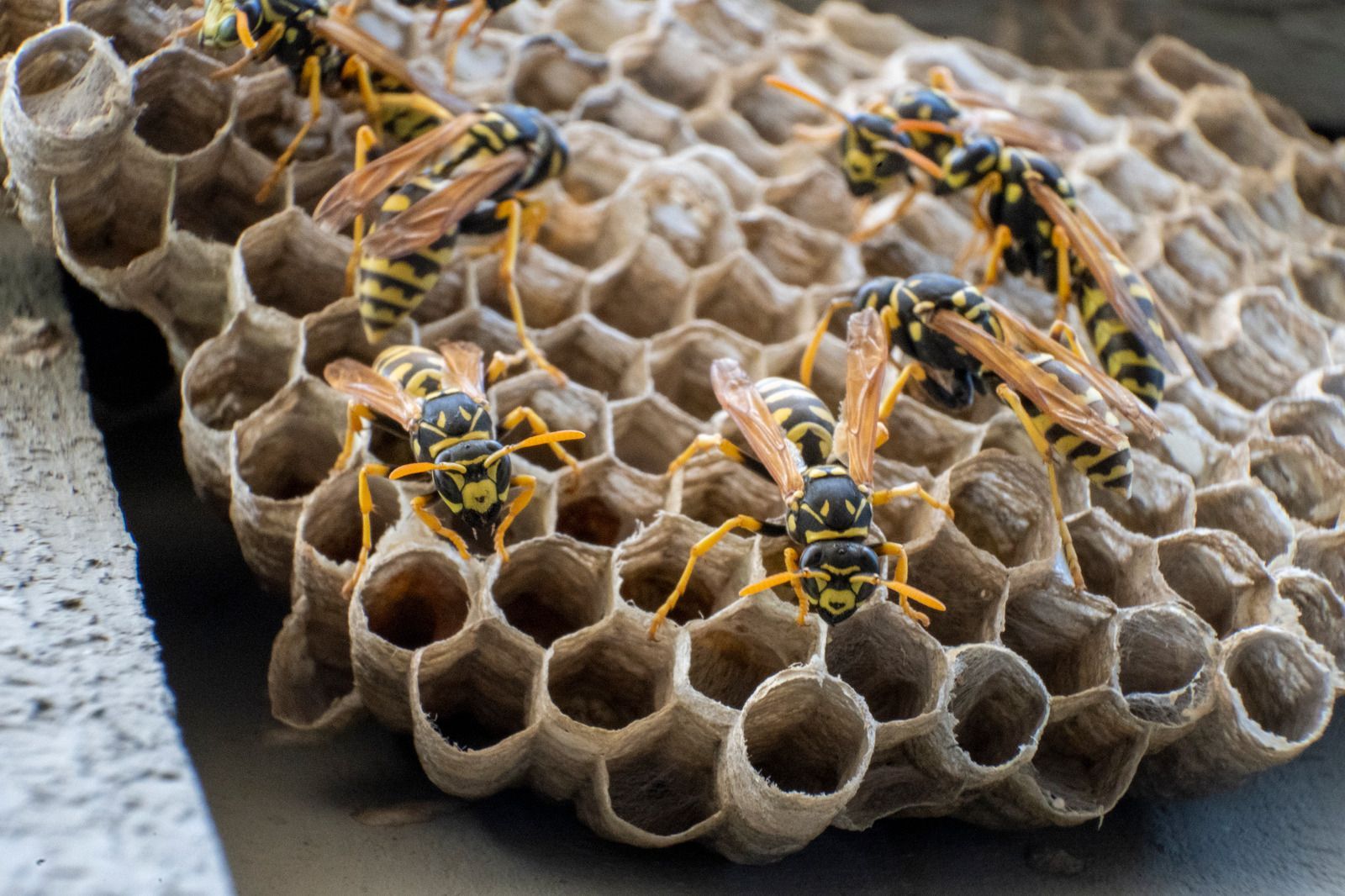
Yellow jackets are scavengers rather than flower foragers, which is why they crowd trash cans, pet bowls, and outdoor tables in a way that honey bees never do. They also sting repeatedly and actively recruit nest mates the moment they are disturbed. Treating the actual nest, rather than the visible traffic, is the only thing that ends it. 17 years of these calls around here informs that approach. Get in touch through our contact page.
The Yellow Jacket Colonies We Treat
Ground Nest Location and Treatment
An underground colony announces itself through one small hole with heavy two-way traffic, often in a lawn or slope. The true entrance is confirmed first, then the nest itself is treated directly rather than the airspace above it.
Wall Void and Attic Colonies
Yellow jackets readily nest inside structures, using the same gaps honey bees do but building paper rather than wax. These colonies get treated at the nest and then sealed, because an untreated void can push workers into living space.
Retaining Wall and Slope Nests
Block walls, riprap, and cut slopes offer ready-made cavities behind the face where a colony expands unseen. Treatment reaches through the void rather than the surface, and the wall is checked for the secondary openings these nests often keep.
Compost, Woodpile, and Debris Nests
Stacked wood, green waste, and long-undisturbed piles hide colonies at exactly the height where somebody reaches in. The pile is treated before it is disturbed at all, then cleared back enough to confirm the nest itself has genuinely been reached.
Commercial Trash and Dumpster Areas
Restaurants, schools, and loading areas draw scavenging workers in numbers that make an outdoor space unusable. Both the nest and the food source get addressed, since treating one without the other rarely holds for more than a week.
Entrance Sealing After Treatment
Once the colony is dead, the opening it used stays attractive to next season's founding queens. Ground holes are closed and structural gaps are sealed, which is the step that stops the same corner producing a nest every year.
Lorem ipsum dolor sit amet, consectetur adipiscing elit.
Title 3
Why Choose Us for Yellow Jacket Nest Removal
Flight Lines Tracked to the Real Nest
Workers frequently enter several feet from where the nest actually sits, particularly in walls and slopes. Watching the traffic properly before treating anything is the difference between killing a colony and merely irritating one that carries on regardless.
Late-Season Colonies Handled Properly
An August nest is a different animal from a June one, holding many times the population and defending far more aggressively. The approach, the timing, and the protective gear all get scaled to what is actually in the ground.
Protective Equipment That Genuinely Matters
Yellow jackets sting repeatedly and recruit nest mates within seconds of a disturbance. Full protective gear is not theater with this insect, it is the reason a ground nest treatment finishes calmly instead of turning into an incident.
Food Areas Cleared Before Guests Arrive
Patios, play areas, and trash enclosures are where these colonies cause by far the most trouble. Scheduling around events, deliveries, and school hours is straightforward, and it makes the difference between a usable outdoor space and a cancelled afternoon.
Treatment Placed, Not Sprayed Everywhere
Reaching the nest directly means far less product gets used overall. Lawns, vegetable beds, and pet areas all stay largely untouched, which matters when the colony happens to be sitting in the middle of a family back yard.
Follow-Up on Stubborn Ground Nests
Some underground colonies have secondary entrances or sit deeper than a single treatment can reach. Checking back on the traffic afterward, and returning again if it has not fully stopped, is simply part of doing this job properly.
What Our Client Says
Hear from our Escondido, CA clients about their experience with Bee Free Bee Removal and our reliable pest control services. We’re committed to providing safe, effective, and professional solutions.
A Back Yard That Belongs to You Again in August
Yellow jackets pick the worst possible moment to become a problem. Colonies peak exactly when people want to be outside, and a nest that nobody noticed all spring suddenly makes the lawn, the patio, and the trash enclosure into places to be avoided. Ending it means finding the actual nest rather than chasing the traffic, treating it directly, and then closing the opening so next year's queen picks somebody else's slope. Bee Free Bee Removal handles these colonies right across Escondido, CA, including the ground nests that other visits have failed to reach. Describe what you are seeing on our contact page.
FAQ's
How do I locate a yellow jacket nest in the ground?
Watch from a safe distance during warm daylight and follow the traffic to a single small hole. After 17 years, Bee Free Bee Removal still finds most Escondido, CA ground nests that way rather than simply by guessing.
Why do yellow jackets get so aggressive in late summer?
Population peaks and the food supply runs short at the same time. A colony that started with a single queen now holds several thousand workers competing for protein and sugar, which pushes them toward people, picnics, and trash cans.
How many yellow jackets live in one nest?
Commonly a few thousand workers by the season's end, with some structural colonies going considerably higher than that. That population is exactly why partial treatments fail and why a nest gets harder to handle the longer it is left.
Do yellow jacket colonies die off over winter here?
Most do, with only mated queens surviving to start again in spring. Mild coastal winters here occasionally let a colony carry over, which is one reason an old nest site deserves proper sealing rather than being simply left empty.
Does pouring boiling water down the hole work?
Almost never, and it puts you directly over the entrance while doing it. Nests sit far deeper and wider than the visible hole suggests, so the usual result is a partly damaged colony and a very defensive response.
Why are yellow jackets swarming my trash cans and picnic table?
Because they scavenge for food rather than forage on flowers. Protein early in the season and sugar later on both come easily from bins, pet bowls, and outdoor meals, which is why they interrupt lunch the way honey bees never do.
What happens if a ground nest is only partly treated?
The colony survives, becomes noticeably more defensive, and frequently opens a second entrance. Bee Free Bee Removal checks the traffic afterward on Escondido, CA ground nests instead of assuming a first attempt worked, because partial treatment is worse than none.
How close can I safely mow to a known ground nest?
Not close at all until it has been treated. Mower vibration is one of the most reliable triggers for a mass defensive response, and people get stung dozens of times running a machine straight over a hidden entrance.